Friday, April 21, 2023

Week 3: Robotics + Art

The Industrial Revolution has shifted us into a mechanized world starting with the printing press which was introduced to the West in 1450 by Johannes Gutenberg. Following the printing press, we saw the development of the assembly line technique of mass production produced by Henry Ford. The assembly line helped produce a high amount of cars and reduced labor for many people. (Vesna, Lecture 1). However, over time the evolution of machinery has gone from assisting humans in mass production to assisting humans in their everyday life.


Ford Assembly Line


In 2003, Rodney Brooks spoke on TED Talk about the possibility of robots invading our lives. He stated that he found it hard to believe in a world where we weren’t surrounded by them everyday. His TEDTalk is continuing to be proven prophetic. However, some machines aren’t assisting humans to complete jobs. They are now completing the jobs for us. In the past couple of years we have been slowly introduced to the convenience of self-checkout machines. From my experience, I first spotted stores having around two machines but now these same stores have sections of self-checkout machines. In 2016, Amazon introduced Amazon Go which is a store with no employees that allows customers to shop and walk out with their items. Amazon Go is using a cashier-less technology that automatically charges customers once they walk out of the store. This can be convenient to people who don't have time to wait in line at a checkout stand. However, this is bad news to some cashiers as “a widespread adoption of this technology would eliminate hundreds of thousands of jobs” (Schweizer).


Inside of Amazon Go Store


Although robots seem threatening to our working environment, they have also greatly integrated into the world of art. In Walter Benjamin’s “The Work of Art in the Age of Mechanical Reproduction” he expresses his concern on how mechanical reproduction can affect the authenticity of art. He believed that repetition and lack of aura in art can decrease its value because it would not be handmade. However, artists like Fred Abels are using machinery to create a new form of art. Fred Abels has created a robot named “Dirk” that resembles a homeless man. This form of art has fascinated many people as they believe Dirk to be a real human being. Dirk has even traveled to countries such as Brazil and Taiwan where he has been welcomed by many people.


"Dirk" Created by Fred Abels


Works Cited

Abels, Fred. “Dirk the Homeless Robot.” Electric Circus, http://www.electriccircus.nl/html/dirk-eng.html.

Benjamin, Walter. "The Work of Art in the Age of Mechanical Reproduction." 1936

Brooks, Rodney. “Robots Will Invade Our Lives.” TED Talk, https://www.ted.com/talks/rodney_brooks_robots_will_invade_our_lives?language=en.

Schweizer, Errol. “Why Grocery Retailers May Eliminate Cashiers.” Forbes, Forbes Magazine, 2 Mar. 2022, https://www.forbes.com/sites/errolschweizer/2022/03/01/will-grocery-retailers-eliminate-cashiers/?sh=3a43933a7d88.

Vesna, Victoria. "Industrialization, Robotics, Kinetic/Robotic Art." Design Media Arts 9, April 2023, University of California Los Angeles. Lecture.


 Images Cited

“Celebrating the Moving Assembly Line in Pictures.” Ford Media Center, The Ford Motor Company , https://media.ford.com/content/fordmedia/fna/us/en/features/celebrating-the-moving-assembly-line-in-pictures.html.

Kraft, Caleb. “Dirk, a Life-like Homeless Robot, Is an Interesting Social Experiment.” Make, 20 July 2016, https://makezine.com/article/technology/dirk-a-life-like-homeless-robot-is-an-interesting-social-experiment/.

Weir, Melanie. “How to Shop at Amazon Go, the Cashierless Store Where You Can Take Your Items and 'Just Walk out'.” Business Insider, Business Insider, https://www.businessinsider.com/guides/tech/how-to-shop-at-amazon-go.

Friday, April 14, 2023

Week 2: Math + Art


    Mathematics has played a major role in the creative expansion of art and science. In Dr. Vesna’s lecture “Mathematics Part 1” she states that “math is a system of symbols and rules of organization”. What I realized after hearing that is if i were to define art or science in my words, it would be similar to this definition. Science, art, and math relate to each other through their use of linear perspective, patterns, and their need to use calculations in order to create. 

In Linda Dalrymple Henderson’s article “The Fourth Dimension and Non-Euclidean Geometry in Modern Art: Conclusion”, she expresses that the fourth dimension and non-Euclidean Geometry have encouraged artists to create new forms of art. Henderson claims that both non-Euclidean geometry and the fourth dimension were “primarily a symbol of liberation for artists” (Henderson, 205). It fascinates me that these concepts have allowed artists to portray their 3-dimensional perception of nature onto a 2D plane through the 4th dimension. 


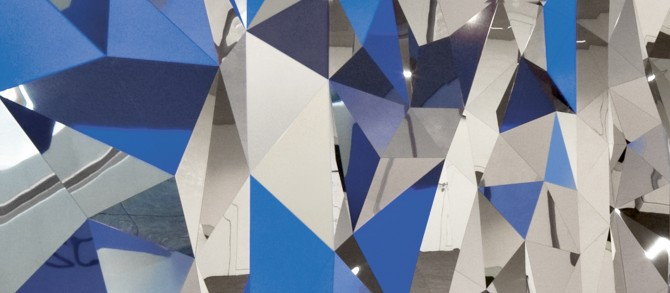
Anamorphic Mirror


Dr. Vesna mentions Brunelleschi who was an artist that was credited to have the first correct formulation of linear perspectives. Linear perspective is a “mathematical system for representing 3-dimensional space onto a flat surface”. Brunelleschi calculated the length of both objects and pictures and its distance behind the plane of a canvas. This process allowed him to understand vanishing points where all parallel lines in the plane meet. After looking over “Lesson 3: Vanishing Points and Looking at Art” by Marc Frantz, I have learned that The Vanishing Point Theorem has allowed artists to portray their perspective without any distortion as he states on page 7. Calculating a vanishing point and having parallel lines meet is what builds an artists perspective of nature. This has allowed me to understand how math is incorporated in art. The precision artists have to have in order to correctly display their perspective is something I didn't acknowledge before. 


Perspective Drawing for Church of Santo Spirito in Florence 


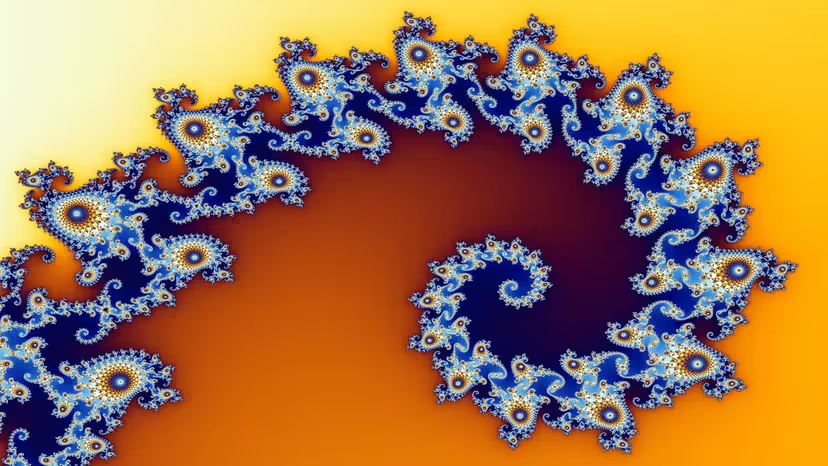
            Flatland by Edwin A. Abbott showed me the significance of expanding our knowledge by exploring new findings. The Square in the story became aware of the third dimension and began to question nature. Just like Square, humans have questioned endless possibilities and that has allowed us to expand our knowledge. Our curiosity has allowed mathematicians to discover the Mandelbrot Set which has shown us Fractals that show beautiful endless patterns. 


Fractal 


Works Cited

Wolfram MathWorld. (n.d.). Mandelbrot Set. Wolfram MathWorld. Retrieved April 14, 2023, from https://mathworld.wolfram.com/MandelbrotSet.html 

Vesna, Victoria. Mathematics-pt1-ZeroPerspectiveGoldenMean.mov. YouTube, YouTube, 9 Apr. 2012, www.youtube.com/watch?v=mMmq5B1LKDg&ab_channel=UCOnline.


“Flatland.” Flatland, by E. A. Abbott, 1884, http://www.ibiblio.org/eldritch/eaa/FL.HTM.. “Flatland.” Flatland, by E. A. Abbott, 1884, http://www.ibiblio.org/eldritch/eaa/FL.HTM.


Henderson, Linda Dalrymple. “The Fourth Dimension and Non-Euclidean Geometry in Modern Art: Conclusion.” Leonardo, vol. 17, no. 3, 1984, pp. 205–10. JSTOR, https://doi.org/10.2307/1575193. Accessed 15 Apr. 2023.

Frantz, M. (n.d.). Lesson 3: Vanishing Points and Looking at Art. Retrieved April 15, 2023, from https://www.cs.ucf.edu/courses/cap6938-02/refs/VanishingPoints.pdf 


Images Cited

Brunelleschi, F. (n.d.). Filippo Brunelleschi - 13 artworks - sculpture. www.wikiart.org. Retrieved April 14, 2023, from https://www.wikiart.org/en/filippo-brunelleschi 

Deutsche Bank headquarters. (n.d.). Anamorphic Mirror. Art+Com Studios. Retrieved April 14, 2023, from https://artcom.de/en/?project=anamorphic-mirror. 

BEYER, W. O. L. F. G. A. N. G. (2023, March 8). How Fractals Work. HowStuffWorks Science. Retrieved April 14, 2023, from https://science.howstuffworks.com/math-concepts/fractals.htm 


Saturday, April 8, 2023

Week 1: Two Cultures

Hello everyone! My name is Shelly Alonso and I am a third year Cognitive Science major. This week’s materials have really resonated with me because of the reason I have chosen Cognitive Science as my major. I chose Cognitive Science because of the pressure I felt to pursue a STEM major. I have always preferred humanities and this has helped me be stay in between both fields.


UCLA Campus Map Illustrations


C.P Snow’s Essay, “The Two Cultures and the Scientific Revolution” really stuck out to me the most because of his take on the division between science and humanities. Attending UCLA I have experienced the separation between North and South campus but after reading “The Two Cultures” I have learned that the separation is much deeper in society than on a small campus. C.P Snow navigated both communities as he was a scientist on a journey to write a book. I connected to this because I have made many connections with both STEM and humanity majors and their beliefs about each other are very similar to what he states. C.P snow states that “they have a curious distorted image of each other. Their attitudes are so different that, even on the level of distortion, they can’t find common ground”. This quote by Snow on page 5 really stuck with me because of my experience at UCLA, being that I experience the difference between the two fields make it hard for me to find a place within one group. In my experience STEM majors look down on humanity majors and it's something that has bothered me but now I know where this stems from. In an article called "A campus divided" written by Prime from the Daily Bruin a student states that they overhead someone call North campus majors "stupid". This doesn't shock me as I feel that some STEM majors believe they are better and smarter than North campus majors.


UCLA North Campus


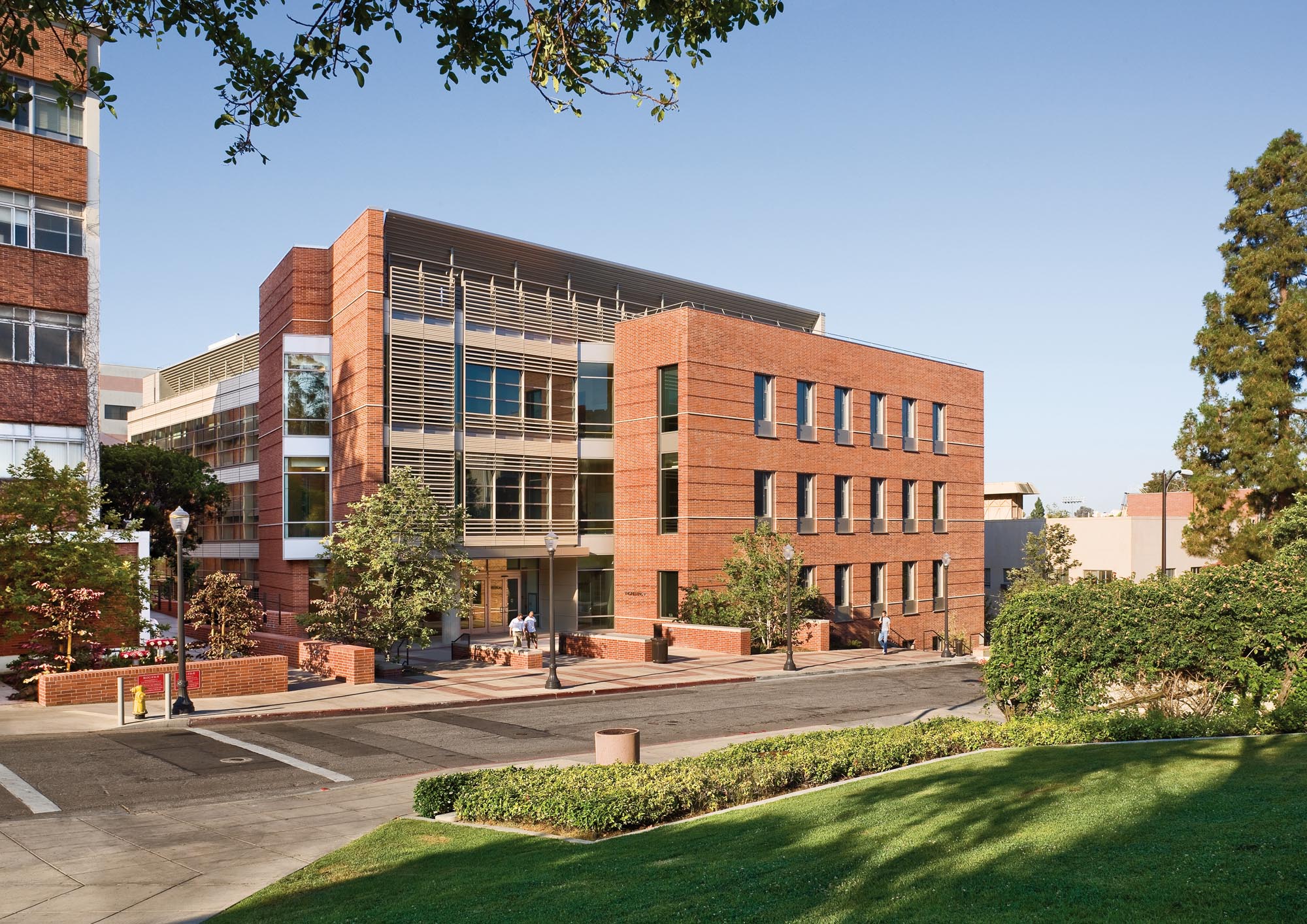
The division between North and South campus is very apparent to me. In my opinion, North campus has a much more welcoming and bright environment due to its structure. It has more plant life surrounding it which I believe represents north campus majors. However, South campus feels more dull since it feels more city-like.

UCLA Engineering Building

Works Cited

Snow, C. P. “The Two Cultures and the Scientific Revolution.” The Rede Lecture. The Rede Lecture, 2022, Cambridge, U.K., Cambridge University.

Jung, Justin. “A Campus Divided.” PRIME, https://prime.dailybruin.com/justinnorth&southcampus.

Vesna, Victoria. “Toward a Third Culture: Being in Between.” Leonardo, vol. 34, no. 2, 2001, pp. 121–125., https://doi.org/10.1162/002409401750184672.

UCLA North Campus. https://www.laaudubon.org/calendar/2022/9/30/ucla-botanical-garden-xh7ed-k9zys-dp8aj-kf24f.

“UCLA Engineering Building.” CO Architects, https://coarchitects.com/projects/science-technology/ucla-engineering-building/.

Rabinky, Maria. “UCLA Campus Map Illustrations.” Rabinky Art, LLC, 7 Aug. 2020, https://rabinkyart.com/illustration/ucla-campus-map-illustrations.

Event 3: COLOR LIGHT MOTION

  Event 3 Registration Email Confirmation On June 3rd, I attended Claudia Schnugg's meeting, Color Light Motion, that revolved on Experi...